Front cover
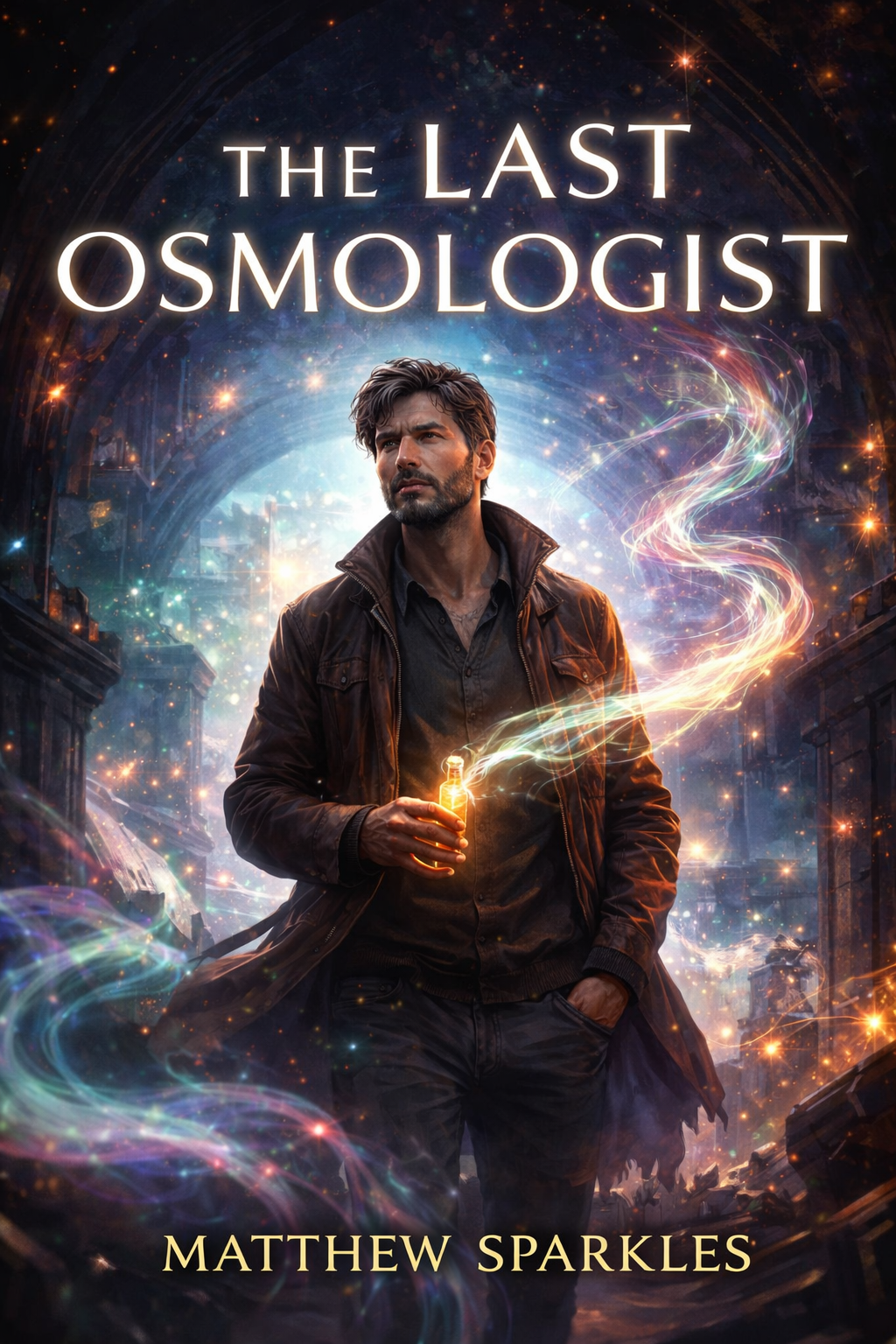
Final front cover artwork.
Book Three of the Scentence Trilogy
The trilogy finale by Matthew Sparkles, centered on scent, memory, identity, and power. The Amazon listing is now live, and the full text is available below in the in-browser reader. The earlier books now have their own linked landings as the Scentence trilogy expands.
Front cover
Final front cover artwork.
Back cover
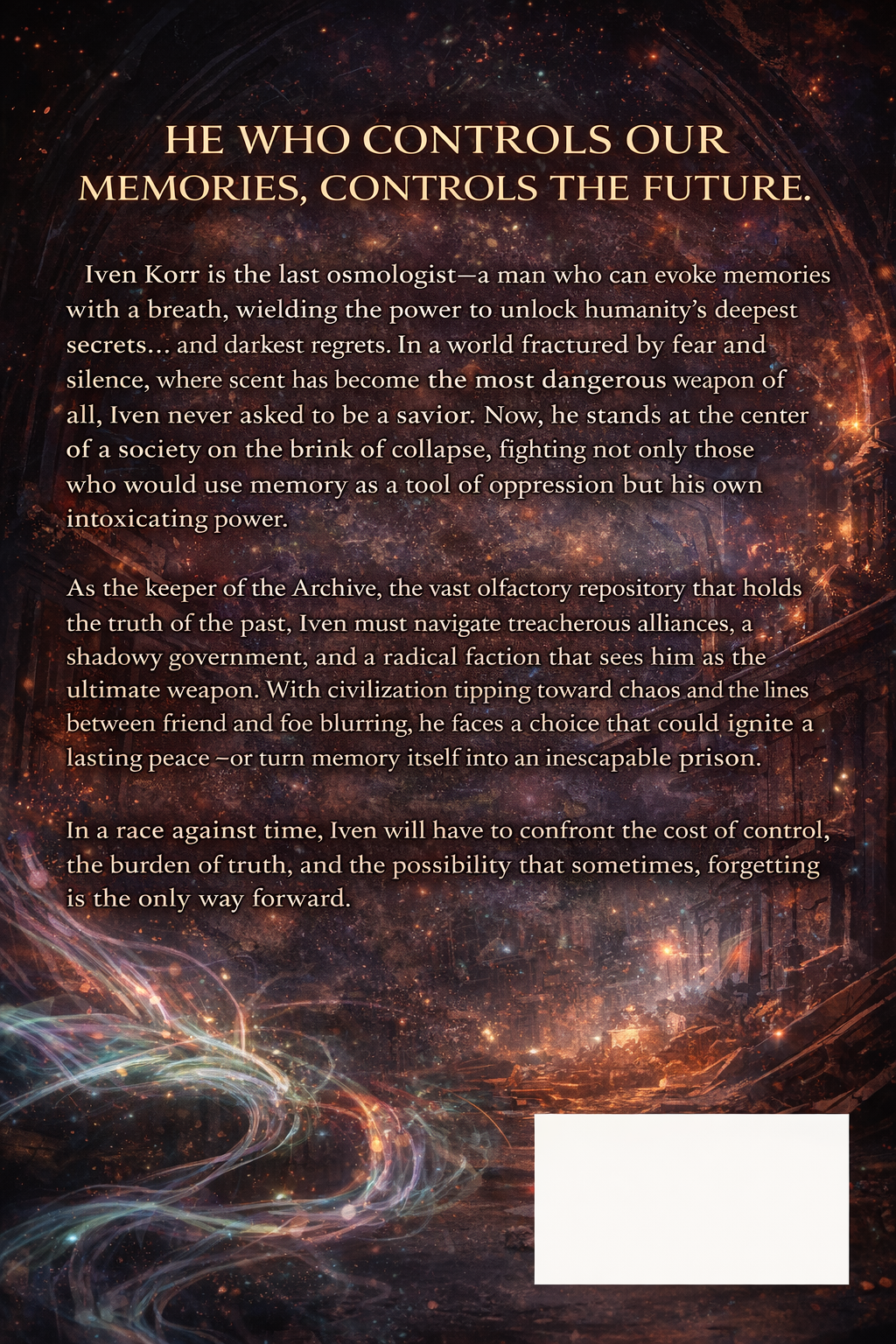
Final back cover artwork.
Read the complete book right here in-browser with a full ereader view.
Series navigation
The trilogy pages now point to each other directly so readers can move backward to the origin story or forward to the coming-soon middle book.
Book One
The trilogy opener, now live with the full EPUB, synopsis, and placeholder cover until the final artwork lands.
Book Two
The middle volume, now represented by a live coming-soon landing and series bridge.
Book Three
You are here: the finale, already live with the finished text, cover art, and Amazon listing.
As the third book in the Scentence trilogy, The Last Osmologist takes the scent-memory architecture seeded in The First Recall and expands it into a wider social order built on managed forgetting, institutional control, and the politics of who gets to keep the past.
The Last Osmologist is a dystopian science fiction novel centered on an almost-forgotten human sense: smell -- and the fragile, dangerous relationship between memory, identity, and power.
Set in a near-future society shaped by fear, silence, and algorithmic control, the novel follows Iven Korr, the last remaining osmologist: a specialist capable of reading, preserving, and reconstructing memories through scent. In this world, smell is no longer a passive sense. It has become a vector of influence, manipulation, and control -- a technology weaponized by those who understand that memory, once altered, can quietly reshape the future.
Civilization has embraced forgetting as a form of safety. Painful memories are filtered, archived, or chemically muted. Truth is curated. History is edited not by force, but by omission. The population functions, but something essential has been amputated: the emotional continuity that makes a person whole.
Iven exists at the edge of this system. As the keeper of the Archive, a vast olfactory repository of humanity's unaltered past, he is both invaluable and dangerous. Through scent, he can unlock moments people were never meant to remember -- griefs erased for comfort, loves sacrificed for stability, crimes buried for peace. Each inhalation carries the risk of collapse: not only of the individual reliving a memory, but of the society that depends on forgetting to survive.
The novel unfolds as a series of tightly focused chapters -- "scentences" -- each one exploring a moment, a memory, or a fracture point in the world. Some chapters reveal intimate human losses: a spouse forgotten, a childhood home reduced to data, a moment of joy stripped of context. Others expose the machinery of the regime itself: how scent control became policy, how archives became prisons, and how safety slowly replaced truth as the highest moral value.
As tensions rise, Iven is pulled into a conflict between multiple forces:
At the core of the story is Iven's internal struggle. The power he holds is intoxicating. Memory is not neutral, and neither is the act of restoring it. With every truth uncovered, he must confront the cost of control -- and the possibility that some wounds, once reopened, cannot heal.
The novel builds toward a quiet but devastating question: If memory defines identity, who are we when memory is curated -- and who decides what is safe to remember?
Rather than offering easy answers, The Last Osmologist lingers in ambiguity. It asks whether forgetting can ever be ethical, whether peace built on erasure is peace at all, and whether freedom requires pain. The final movements of the book leave the world balanced on the edge of transformation, with Iven facing a choice that could restore humanity's past -- or lock it away forever.
The Last Osmologist sits at the intersection of dystopian science fiction, metaphysical speculative fiction, and cyberpunk-adjacent social critique, with a unique sensory lens that distinguishes it from traditional tech-driven narratives. It is a story about systems, but told through deeply human moments -- where a single breath can undo a life, or save it.
Support the release
If you want to help fund editing, printing, and research, you can donate to any of the addresses below.
| Coin | Address |
|---|---|
| BTC | 18RWVyEciKq8NLz5Q1uEzNGXzTs5ivo37y |
| DOGE | DPoHJNbYHEuvNHyCFcUnvtTVmRDMNgnAs5 |
| ETH | 0xCb8B2937D60c47438562A2E53d08B85865B57741 |